

Stonehenge
Where the Cosmic Lance Ignites the Circle of Time

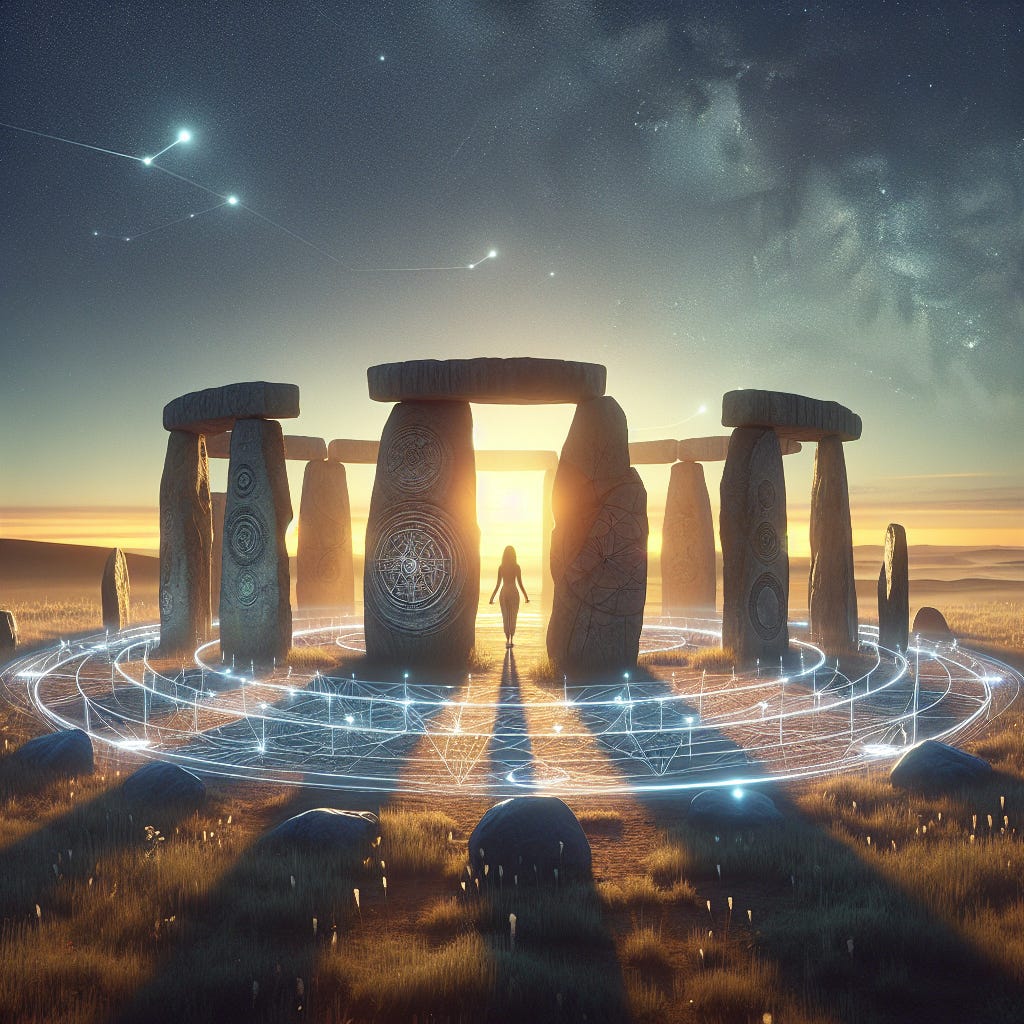
The circle is a whisper from our deepest past, a fundamental symbol etched into the human psyche. Its manifestation in ritual spaces across the ancient world speaks not of primitive superstition, but of a profound and sophisticated understanding, a sacred synthesis of astronomy, geometry, and spirituality. These stone circles, with Stonehenge as their most iconic sentinel, demonstrate how our ancestors transformed this simple geometric form into a complex language for conversing with the cosmos. They built not just monuments, but precise celestial calendars, creating liminal spaces where the earthly and the divine could intertwine.
Stonehenge itself is a poem written in stone across millennia, its verses constructed in stages between approximately 3000 and 1500 BCE. Its majestic circular design was never merely an aesthetic choice; it was a functional and philosophical imperative. The gargantuan sarsens and intricately shaped bluestones were positioned with an accuracy that continues to inspire awe, each one a deliberate marker for critical celestial events. The summer solstice alignment remains the most famous of these celestial dialogues. As dawn breaks on the longest day, the rising sun appears to crown the Heel Stone when viewed from the circle’s sacred centre. This alignment orchestrates a dramatic visual symphony: a blade of sunlight penetrates the great central trilithon archway, casting a beam that seems to ignite the very heart of the circle with primordial fire.
Yet, the narrative of Stonehenge is a tale of two solstices. Less commonly discussed, but possessing a deeper, more introspective magic, is the winter solstice alignment. Here, it is the setting sun that commands attention, aligning its descent with the monument’s centre when viewed from the processional Avenue. This event, marking the year’s rebirth from the depths of darkness, would have been a potent symbol of hope and cyclical renewal. Together, these solar alignments transformed the static stone circle into a dynamic clock, marking the eternal loop of the seasons. But the sophistication of Stonehenge extends beyond the sun. Researchers have identified probable lunar alignments that track the far more complex 18.6-year lunar cycle. The placement of specific stones appears to map the moon’s own journey, marking the extreme points of moonrise and moonset, known as the lunar standstills. This capability reveals a mind-boggling precision, proving these circular ritual spaces were multi-functional astronomical instruments, capable of measuring celestial time with a granularity that stuns the modern mind. The builders understood that the circle was the essential geometric key, for it alone perfectly reflects the cyclical dance of the heavens above.
While Stonehenge stands as a pinnacle of this ancient science, it is far from alone. It represents a brilliant example within a widespread, almost innate, global tradition of circular astronomical calendars. From the windswept coasts of Europe to the vast plains of North America, this architectural idea emerged independently, suggesting a universal human intuition. Consider the silent grandeur of Callanish on the Isle of Lewis, where stone circles and radiating alignments form a complex petrified landscape, tracking both the sun’s yearly journey and the moon’s more subtle, long-term cycle. Journey to Germany, and you will find the Goseck Circle, dating to an astonishing 4900 BCE, one of the oldest known solar observatories on Earth, its precisely aligned gates framing the solstice sunrise and sunset like a celestial camera obscura. Across the Atlantic, the Medicine Wheels of Wyoming, such as the Bighorn Medicine Wheel, whisper the same truths, with stone spokes aligning to the summer solstice sunrise and sunset and the rising points of significant stars like Aldebaran and Sirius.

These geographically disparate structures share profound architectural principles, a testament to humanity’s shared celestial curiosity. Yet, to view them solely as scientific instruments is to miss their true soul. What elevates a place like Stonehenge, or its siblings Avebury and Newgrange, beyond the realm of the observatory is their sacred heart. They were ceremonial centres, places where the veil between worlds was perceived as tissue-thin, where the living could commune with the ancestors, appeal to the gods, and touch the raw forces of nature. Like the physical Medicine Wheels of North America, these circles served as altars for offering, thresholds for crossing, and focal points for spiritual practice. They were spaces where the human and the divine could meet in conscious ritual.
The circular form, therefore, was the ultimate sacred symbol. It reflected a core belief in the cyclical nature of all existence: that death precedes rebirth, that darkness holds the seed of light, and that balance is not a static state but a continuous, dynamic movement. This philosophy finds its most breath-taking expression at the winter solstice. Imagine the scene: the world is gripped by cold, the light is feeble. Then, at the precise moment of the sun’s turning, a lance of fire, forged in the heart of the cosmos, slips over the horizon to kiss the Heel Stone. In that transcendent instant, the stone is transformed from a cold, inert monolith into a vibrant womb. It is the fire of inspiration that ignites the soul from within, like a flame kindled in the deepest chamber of the spirit, a light that no darkness can extinguish. The sun’s beam becomes a living ribbon of light, a golden path that slashes through the veil separating mortal life from the celestial realms. The stone, a silent witness to generations, becomes pregnant with possibility, an embryonic cosmos awaiting its own birth.
In the Celtic cosmology that later enveloped these lands, fire was revered as the primal, alchemical force. It is the spark that animates the hearth, the flame that forges kinship, and the luminous heart that guides travellers on moonlit paths. When the winter solstice sun descends, its beam, now understood as a divine lance, strikes the heel stone with profound intent, as if it were a druid’s quill inscribing destiny upon the parchment of the earth. The heat of this cosmic arrow is not destructive; it is catalytic and purifying. It melts the cold inertia that clings to the human soul after the long, psychological dark of winter, and refashions it into a new pattern of light and potential.
The metaphysical resonance of this event echoes through every living thing within the circle. In the hushed anticipation of the solstice dawn, those who stand beneath the towering sarsens may feel their own inner fires stir and awaken. It is as if the lance has pierced not only the stone but also the very fabric of their consciousness, allowing dormant energies, intuitions, and purposes to spill forth in a torrent of renewal. The spark ignites an internal furnace that burns away old fears, doubts, and the shadows that have accumulated over seasons past, offering a clean slate illuminated by cosmic grace.
To witness this moment is to feel the subtle, irresistible tug between the tangible world and the spiritual realm. It is a visceral reminder that our lives are not linear journeys with a definitive beginning and end, but rather ascending spirals that return to their origins, gathering ever deeper wisdom with each revolution. Each time the sun’s lance cuts across the centre of Stonehenge, it reaffirms the ancient belief that every ending is a seed for renewal; every cycle of winter gives rise to a spring. The fire within us, once kindled by this celestial arrow, grows into a steady flame that lights our path forward, guiding us through the personal darkness until the next solstice brings new light.
The lance of fire becomes more than an astronomical marker; it is a participatory sacred rite that invites every soul present to become its own alchemist. The stone’s womb, filled with the radiant energy of the sun’s strike, offers not just physical nourishment but profound spiritual sustenance. It reminds us that we are all born from stellar fire, tempered by the patience of the earth, and destined to return to the luminous heart of the cosmos where our spirits can once again ignite in infinite cycles of rebirth.
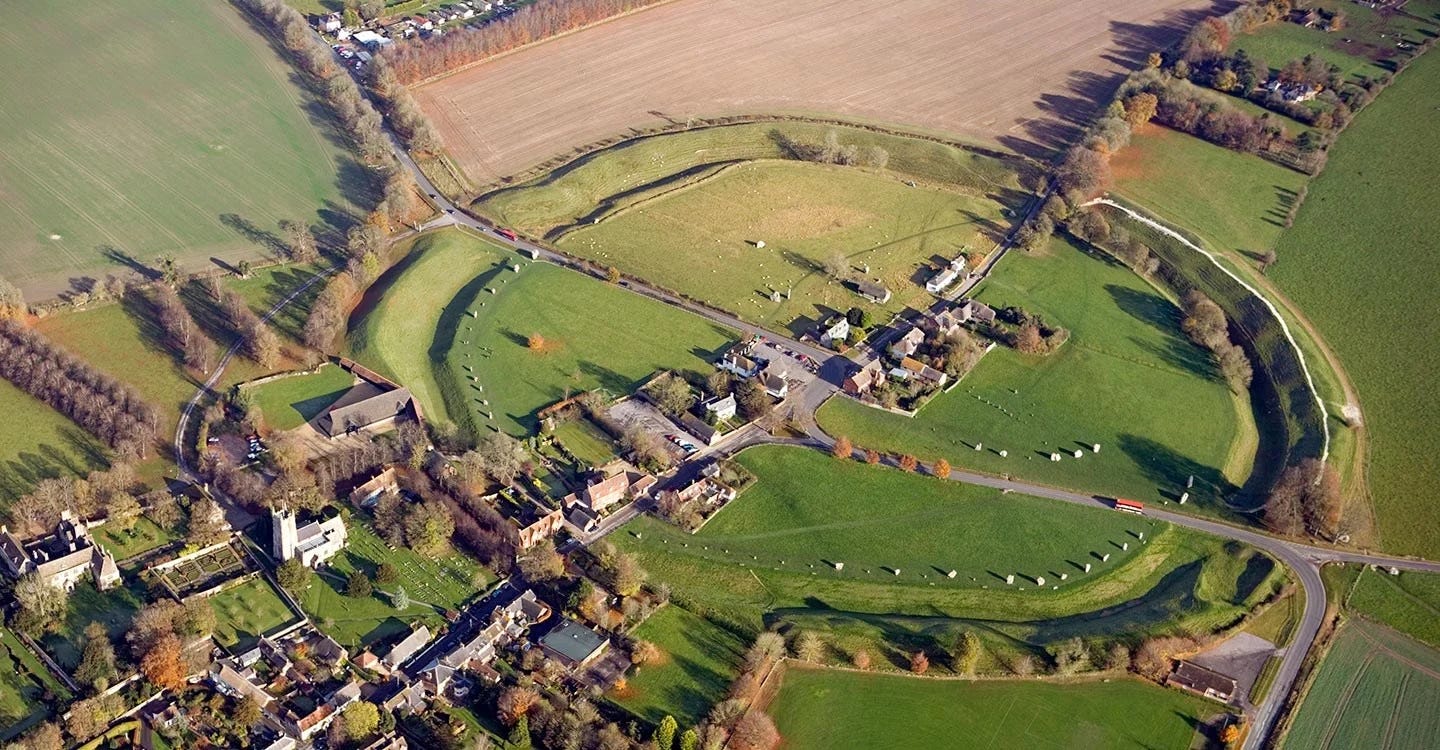
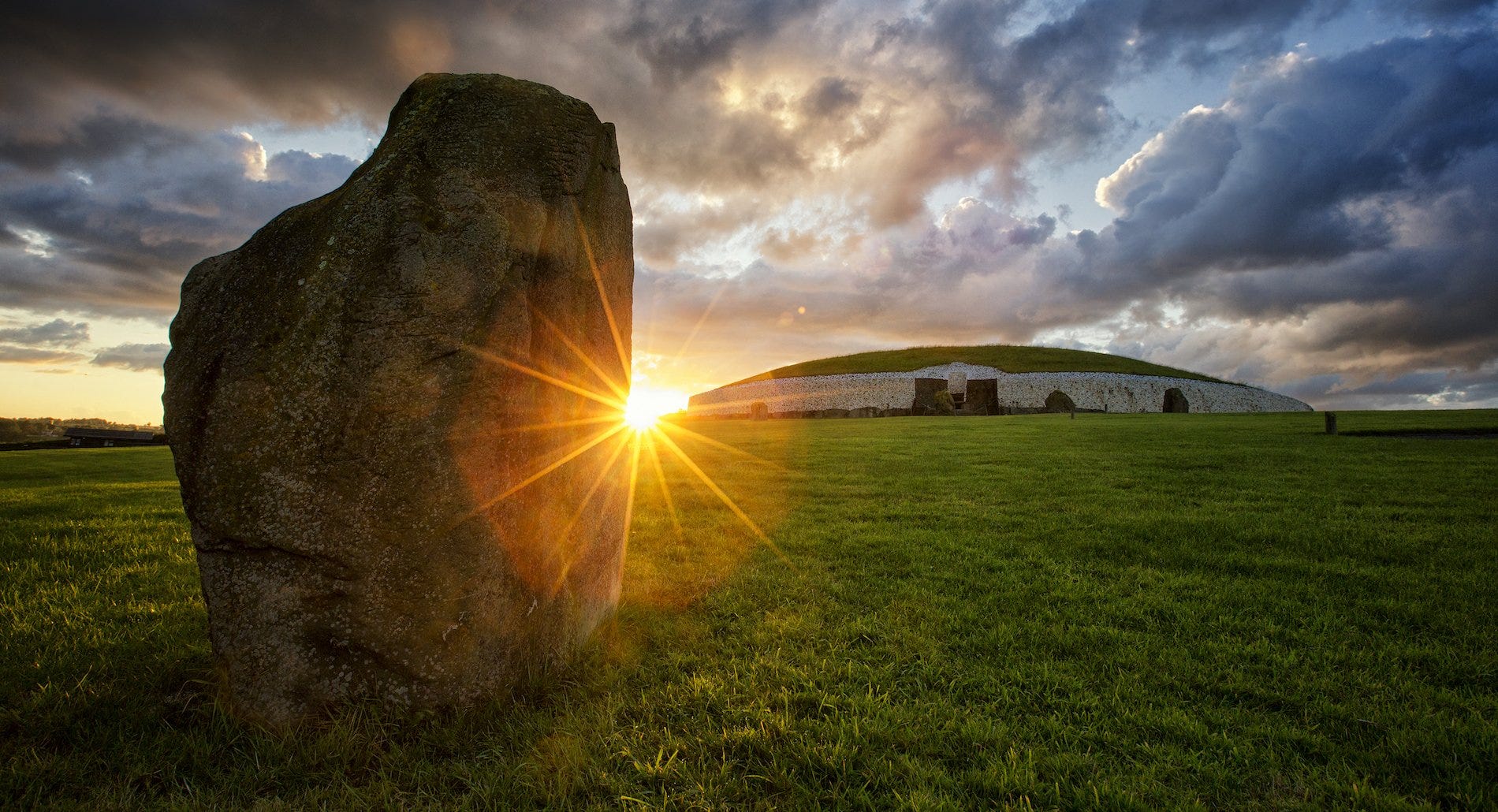
Avebury, with its vast circular enclosure and immense, serpentine stone rings, was a cathedral built not with a roof, but with the sky itself as its dome. It was a place where the earth and heavens met in a sacred, tangible embrace. To walk its pathways was to walk the path of the soul itself, through initiation, through mystery, through profound transformation. And then there is Newgrange, in the sacred Boyne Valley of Ireland, a structure that predated the great pyramids of Egypt. Its passage tomb is aligned with such exquisite precision that on the winter solstice, the first rays of the reborn sun pierce the dark entrance, known as the roof-box, and travel down the long passage to flood the inner chamber with golden light after months of darkness. This was not just an engineering marvel; it was a cosmic ritual frozen in architecture, a symbolic celestial birth happening deep within the womb of the earth. In that moment, it was believed the dead spoke to the living, the ancestors stirred beneath the soil, and the soul of the world remembered its own eternal capacity for renewal.
These sites, in their glorious totality, were not mere observatories. They were altars where offerings to the cosmos were made. They were thresholds where one could step from the mundane into the mythic. They were places where the veil between worlds was not just thin, but translucent, where the breath of the gods could be felt in the wind, where the ancestors whispered through the silence of the standing stones, where the human soul could step across the edge of the known and into the boundless realm of the sacred. The circle, in all its forms—stone, earth, sky, and thought, was the most profound and enduring symbol of the Celtic soul, a timeless map of the cosmos and the human spirit’s place within its wondrous, turning wheel.
Love Alloya